
Safe internal temperatures: what to measure and when to check
Use a food thermometer correctly and distinguish the safety target from the temperature that gives you the texture you want.
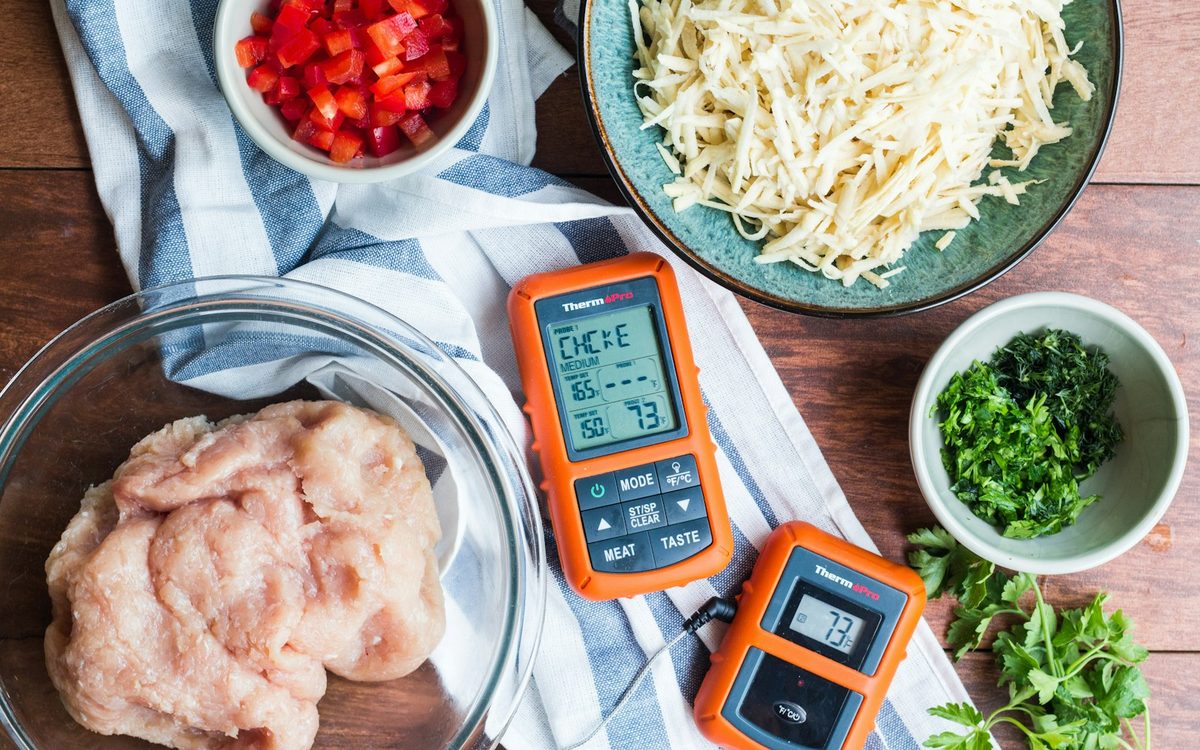
A food thermometer answers a safety question only when its probe reaches the right place. The number also needs the right food category: whole cuts, ground meat and poultry do not share one universal target.
The USDA lists 145°F (62.8°C) plus a three-minute rest for whole cuts of beef, pork, veal and lamb; 160°F (71.1°C) for ground beef, pork, veal and lamb; and 165°F (73.9°C) for all poultry. Its current chart is the source to recheck before cooking (USDA Food Safety and Inspection Service).
Measure the coldest relevant part
Insert the probe into the thickest part of the food, away from bone, gristle and the pan. For a thin cut, insert from the side so more of the sensing area sits in the center. For a whole bird, check more than one location, including the innermost thigh and thickest breast, without touching bone.
Do not rely on color alone. Browning can occur before a safe temperature is reached, while cooked meat can retain pink color for reasons unrelated to doneness.
Match the target to the food
Grinding moves surface bacteria throughout meat, which is why ground-meat guidance differs from intact whole cuts. Poultry has its own 165°F target. Mixed dishes should be checked where their most temperature-sensitive component is thickest; casseroles and leftovers also use 165°F in USDA guidance.
Fish and shellfish have separate signs and temperature guidance. When a package or public-health instruction gives a more specific rule for a product, follow it rather than borrowing a number from another category.
Account for carryover and resting
Food can continue warming after it leaves the heat, especially a large roast. That carryover can help reach a chosen texture target, but it does not erase the safety rule. For whole cuts covered by the USDA’s 145°F recommendation, the three-minute rest is part of the stated safety process.
Resting also lets temperature even out. Record the lowest reading you find, not the most flattering one. If one area is below the target, return the food to heat and check again with a clean probe.
Calibrate and clean the thermometer
Check your thermometer according to its manufacturer’s instructions. An ice-water check can reveal an offset, but probe type and calibration method vary. Wash the stem with hot, soapy water before and after use; do not carry raw-meat contamination into cooked food.
Safety and preferred doneness are different questions
A safety threshold is a minimum control. Your preferred texture may require a higher final temperature, and connective-tissue-rich cuts often need more time and heat to become tender. Conversely, a recipe’s texture cue never authorizes a lower safety target for the food category.
The repeatable sequence is simple: identify the food category, know its current target, place the probe in the coldest relevant part, check more than one spot when needed, and include any required rest. Once safety is established, use technique—not guesswork—to choose the finish you like.