
A gluten-free pizza crust you roll between parchment
Make two thin gluten-free pizza crusts with a flour-specific recipe, clear dough checkpoints and baking guidance for a sheet pan or pizza stone.
By Cooking Clarity
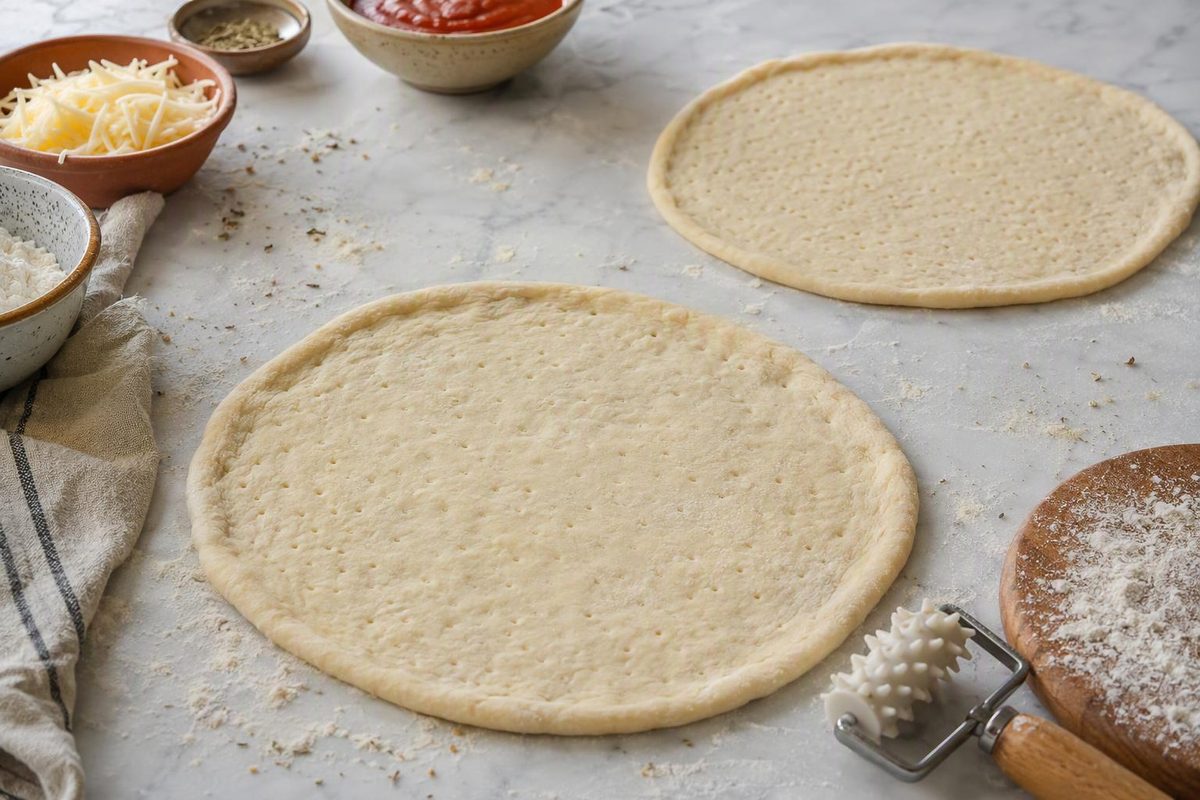
This recipe makes two very thin, 12-inch pizza crusts. The dough should be mildly sticky but manageable—not a loose batter. Roll it between parchment rather than trying to stretch it by hand, keep the toppings light, and bake until the crust browns.
The formula and method below are adapted from King Arthur Baking’s gluten-free thin-crust pizza. It uses a specific flour blend; don’t assume another gluten-free flour will behave the same way.
Ingredients and equipment
Yield: Two 12-inch thin-crust pizzas Rest: 30 minutes Bake: 10–12 minutes per pizza on a baking sheet, or about 8 minutes on a preheated stone Oven: 450°F / about 230°C
For the crusts
- 2 cups (240g) King Arthur Gluten-Free Measure for Measure Flour, plus a little for handling
- 2/3 cup (152g) lukewarm water
- 1 1/2 teaspoons instant yeast or active dry yeast
- 1/2–3/4 teaspoon salt, to taste
- 1 teaspoon baking powder
- 3 tablespoons (35g) olive oil, plus a little for greasing the parchment
Weigh the flour, or gently spoon it into measuring cups and sweep off the excess rather than scooping and packing it.
For topping
- 3–4 tablespoons pizza sauce per pizza
- Cheese and other toppings, used sparingly; use cooked meat rather than relying on this short bake to cook raw meat
You’ll need a bowl, rolling pin, baking sheet or pizza stone, and parchment paper rated for 450°F. Check your paper’s packaging: King Arthur’s parchment, for example, is rated to that temperature.
Make, shape and bake
-
Heat the oven. Preheat to 450°F. If using a pizza stone, put it in the bottom of the oven before heating. For the sheet-pan method, bake on the center rack.
-
Mix the dough. Stir the yeast into the lukewarm water until dissolved. Add the flour, salt, baking powder and olive oil. Stir until everything comes together. Checkpoint: the dough should hold together and be only mildly sticky. If it sticks persistently to your fingers, mix in a little more of the specified flour, checking after each addition.
-
Divide and rest. Split the dough into two equal pieces. Pat each into a disk and place on lightly floured parchment. Cover and rest for 30 minutes while the oven heats.
-
Roll very thin. Working with one disk at a time, roll between two lightly greased sheets of parchment into an approximately 12-inch circle or oval. Remove the top sheet. This is a thin-crust recipe: don’t leave the dough as a small, thick disk and expect the same baking time.
-
Top lightly. Spread 3–4 tablespoons sauce over each crust, then add cheese and your chosen toppings. Avoid piling them high.
-
Bake on the bottom parchment. Transfer the pizza, parchment and all, onto a baking sheet; bake on the center rack for 10–12 minutes. Alternatively, transfer it onto the preheated stone and bake for about 8 minutes. Start checking at 10 minutes on a sheet or about 8 minutes on a stone: the crust should be brown and the toppings heated through. Serve warm. Repeat with the second pizza.
Why the flour and handling matter
Gluten normally helps yeast dough retain the gas that makes it rise. Gluten-free baking needs another source of structure; xanthan gum is one such stabilizer, as explained in King Arthur’s gluten-free flour guide. The Measure for Measure ingredient label lists xanthan gum and cellulose gum. This formula does not call for extra gum.
The package generally advises against using Measure for Measure as a direct substitute in yeast recipes. King Arthur explicitly makes an exception for this particular very thin pizza, which also contains baking powder. That exception is not a reason to use the blend unchanged in thick pizza or bread recipes.
Handling advice is also formula-specific. King Arthur’s separate batter-style gluten-free pizza crust is pressed out with wet fingers and baked before topping. This recipe is rolled and topped before baking. Don’t combine the two methods.
If something looks wrong
| What you see | What to do |
|---|---|
| Dough clings heavily to your fingers | Add a little more of the specified flour; stop when it becomes manageable rather than dry. |
| Rolling pin sticks | Keep the dough between lightly greased parchment sheets instead of rolling directly on it. |
| Crust is pale at the stated time | Continue baking and check frequently. The time is a starting point; browning is the recipe’s finishing cue. |
For someone with celiac disease, check all ingredients, including sauce, baking powder and toppings, and prepare them separately from gluten-containing foods. If an ingredient’s gluten status is uncertain, leave it out or verify it with the manufacturer. NIDDK’s guidance explains why cross-contact matters.
Don’t taste the raw dough. Flour is generally a raw food, and FDA advises against eating uncooked flour, dough or batter. Browning here is a technique checkpoint—not a substitute for safely cooking any meat toppings.