
A simple hummus recipe—and how to make it smoother
Make hummus with canned chickpeas, tahini and lemon, then use clear checkpoints to fix a thick, grainy or overly loose texture.
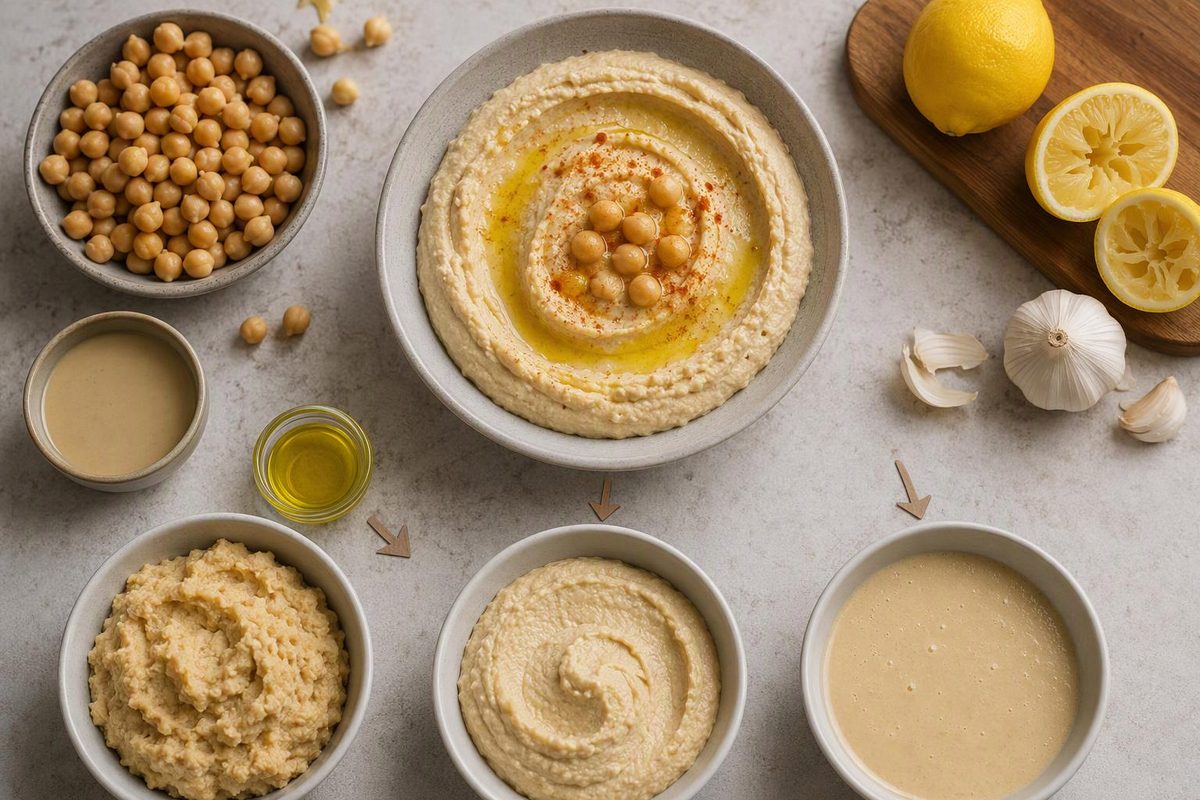
By Cooking Clarity
For a straightforward hummus, blend chickpeas with tahini, lemon, garlic and olive oil, then add cold water gradually. The useful finishing check is texture: a spoon should spread it easily, leaving a soft ridge rather than a stiff mound or a puddle.
Ingredients
This small-batch recipe adapts the proportions and blending sequence in Inspired Taste’s hummus recipe, with a lower starting amount of salt so you can adjust it at the end.
- 1 can chickpeas, labeled about 15 ounces/425 g before draining, drained and rinsed; or 1½ cups cooked chickpeas, about 250 g
- ¼ cup well-stirred tahini, 60 ml
- ¼ cup fresh lemon juice, 60 ml
- 1 small garlic clove, minced
- 2 tablespoons extra-virgin olive oil, plus a little for serving
- ½ teaspoon ground cumin, optional
- ¼ teaspoon fine salt to start, plus more to taste
- 2–3 tablespoons cold water, plus more if needed
- Paprika or sumac, optional, for serving
Equipment: A food processor is the simplest choice. A high-powered blender can work, but may need more frequent scraping, as Inspired Taste notes.
Method
- Choose your chickpea preparation. For the quickest version, use the drained chickpeas directly. For a smoother result, first cover them with water in a saucepan and simmer until a chickpea crushes easily under a spoon, then drain well. This extra-soft checkpoint comes from Rainbow Plant Life’s hummus method. It is a texture choice, not a required cooking step for canned chickpeas.
- Blend the tahini and lemon. Process them for 1 minute. Stop, scrape the sides and bottom, then process for another 30 seconds. The mixture may become thick and pale. If the blade cannot reach it, stop the machine and add the olive oil now rather than letting it run without mixing.
- Add the seasonings. Add the olive oil if you have not already, garlic, cumin and starting salt. Process for about 30 seconds, scrape, then blend again until combined.
- Add the chickpeas in two batches. Blend half for about 1 minute. Stop and scrape, add the rest, then blend for another 1–2 minutes. At this point, a thick paste is normal.
- Adjust with cold water. With the processor running, add water through the feed tube, 1 tablespoon at a time. Start with 2 tablespoons, blend, then check before adding more. Stop the machine before scraping or tasting.
- Taste and serve. Once the texture is right, adjust salt or lemon in small increments. Spoon into a bowl, make a shallow swirl, and finish with a little olive oil and paprika or sumac. Serve with pita or cut vegetables.
The timings are guides; the spreadable-texture checkpoint is the finish line.
Fix the texture before adding more seasoning
These are practical adjustments, not fixed amounts every batch will need.
| What you notice | What to try next |
|---|---|
| Smooth, but stiff or difficult to spread | Blend in cold water, 1 tablespoon at a time, checking after each addition. |
| Grainy, with visible chickpea bits | Stop and scrape, then blend longer. Add a little water if the paste is too thick to circulate. For the next batch, simmer the chickpeas until easily crushed. |
| Persistent flecks of skin | If you want a finer texture, peel the chickpeas before blending next time. Peeling is optional, not a requirement for good hummus. |
| Too loose to hold a soft spoon ridge | Stop adding liquid. Try blending in extra cooked, drained chickpeas a spoonful at a time, then taste again. |
Inspired Taste supports gradual water addition and describes peeling as a modest smoothing improvement; Rainbow Plant Life emphasizes very soft chickpeas. Neither step needs to become a rule if you already like the result.
Use water for thinning when the lemon flavor is already right. More lemon changes both consistency and acidity; more oil is not necessary just because the hummus is thick.
Store promptly
Transfer leftovers to a covered container and refrigerate promptly at 40°F/4°C or below. Use within 3–4 days, following USDA’s general guidance for leftovers, rather than treating this homemade recipe as shelf-stable.
Discard hummus left at room temperature for more than 2 hours, or 1 hour when the temperature is above 90°F/32°C, following USDA’s limits for perishable food. For a gathering, put out a small portion and keep the rest refrigerated.