
How to make risotto—and fix its texture
Make creamy Parmesan risotto with a step-by-step recipe, clear doneness checks, and fixes for hard grains, stiff rice or too much liquid.
By Cooking Clarity
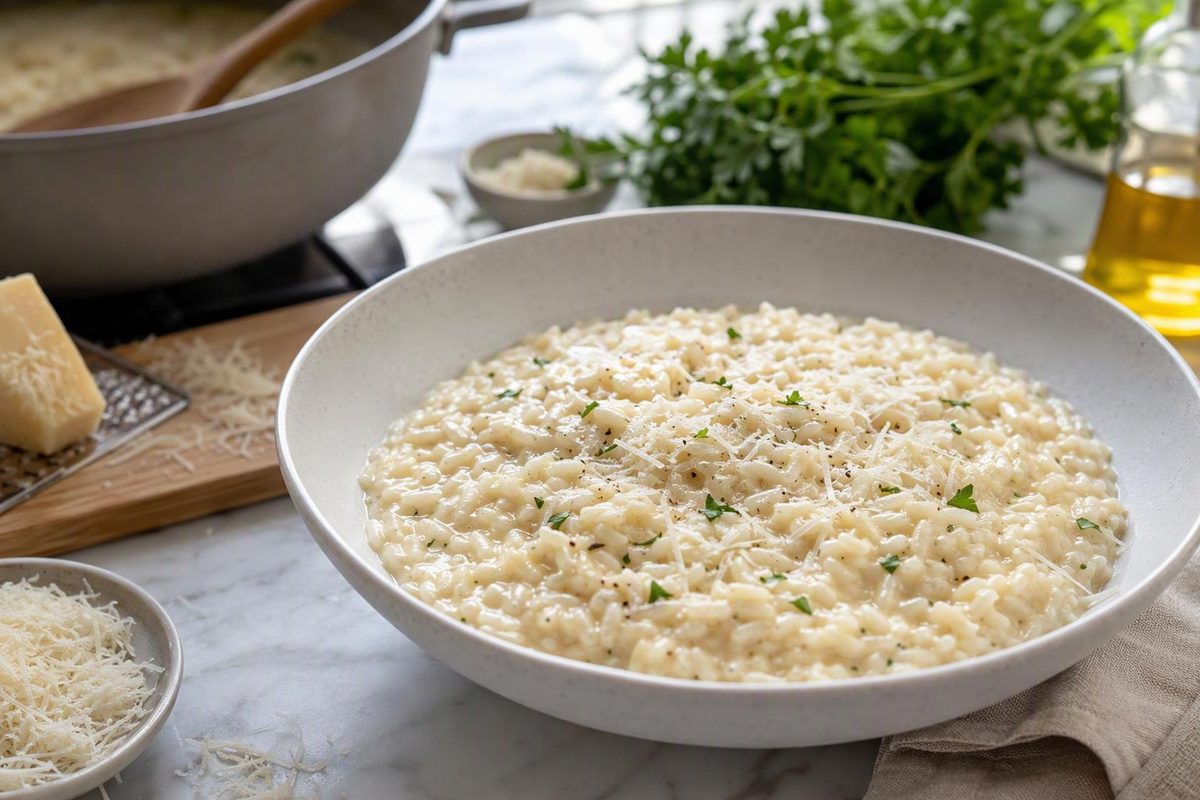
Make risotto by softening onion, briefly toasting risotto rice, then simmering it with hot stock added in stages. Finish with butter and Parmesan. Stop cooking when the grains are tender with a slight bite—not crunchy or mushy. That is the readiness check in BBC Food’s risotto guidance.
Check the sauce separately: the finished rice should move easily when spooned, rather than stand in a stiff mound. You can adjust that looseness with a little hot liquid; you cannot restore the bite of overcooked grains.
Basic Parmesan risotto
This plain version is adapted from the quantities and staged-stock method in Simple Bites’ basic risotto, without its optional mushrooms, saffron or peas. Allow roughly 35–45 minutes, including preparation; use the texture checks below rather than the clock alone.
Ingredients
- 1 tablespoon olive oil
- 4 tablespoons butter, divided
- 1 medium onion, finely chopped
- 1½ cups Arborio rice
- ¼ cup dry white wine or vermouth, optional
- 6 cups chicken or vegetable stock, plus hot water if needed
- 1 cup freshly grated Parmesan
- Salt and black pepper, to taste
Use US cup and tablespoon measures. For a vegetarian version, choose vegetable stock and a vegetarian hard cheese.
Use risotto rice and leave it unwashed. Arborio, Carnaroli and Vialone Nano are suitable choices. Ordinary long-grain rice does not release starch in the same way, and washing is unnecessary for this preparation, as Good Food’s rice guide explains. No cream is needed for this recipe.
1. Prepare before you start
Chop the onion and grate the cheese. Bring the stock to a gentle simmer in a separate saucepan and keep it hot. Use a wide, heavy-bottomed pan for the rice.
Hot stock avoids repeatedly cooling the cooking mixture; Jamie Oliver’s risotto guidance recommends keeping it simmering alongside the rice.
2. Soften the onion, then toast the rice
Heat the oil and 3 tablespoons of the butter over medium-low heat. Add the onion and cook, stirring occasionally, until soft and translucent, about 10 minutes. Reduce the heat if it starts to brown.
Add the rice and stir for about 1 minute, coating the grains in the fat. Look for a glossy coating; you are not trying to brown the rice.
3. Add wine, then stock in stages
Add the wine, if using, and stir until most of the liquid has evaporated. If skipping it, go straight to the stock.
Add a ladleful or two of hot stock. Adjust the heat to maintain a gentle, active simmer—not a fierce boil. Stir frequently, sweeping the bottom and corners of the pan.
When most of the liquid is absorbed and the mixture begins to thicken, add another ladleful. Do not wait for the rice to stick or the pan to become completely dry. Repeat, keeping the rice moist as it cooks. Stay nearby and stir gently rather than frantically.
4. Taste the rice before deciding it is done
Start tasting after about 15 minutes of stock additions. Around 20 minutes from the first stock addition is a useful guide, not a deadline.
A grain should be tender throughout with slight resistance when bitten. A hard or chalky centre means it needs more cooking and liquid. Keep adding stock in small amounts; if you run out, use hot water. You may not need all the stock.
5. Finish off the heat
Once the grains are ready, turn off the heat. Stir in the remaining tablespoon of butter and the Parmesan. Taste before adding salt, because the stock and cheese already contribute saltiness.
Add a small splash of hot stock or water if the mixture is stiff. Aim slightly looser than you want to eat it. This off-heat finish and loose consistency follow Jamie Oliver’s finishing guidance. Serve promptly.
Fix the texture you have
| What you notice | What to do next |
|---|---|
| Hard-centred grains, with little liquid left | Add hot stock and continue gently simmering. More butter or cheese will not cook the centre. |
| Tender grains, but a stiff or sticky mound | Turn off the heat and gently stir in hot stock or water, a small splash at a time, until it moves easily. |
| Lots of liquid, but grains still firm | Continue simmering and stirring before adding more stock. Taste again as the liquid reduces. |
| Tender grains floating in excessive liquid | Briefly simmer to reduce, checking often. Stop before the grains become mushy; a loose sauce is preferable to overcooked rice. |
| Mushy grains that are losing their shape | Stop cooking. Their firm texture cannot be recovered; reducing further only cooks them more. |
The two decisions are separate: taste a grain to judge whether cooking should stop, then adjust the surrounding liquid to get the consistency you prefer.